
2:00 pm to 2:20 pm CET
Event Registration and Networking
2:20 pm to 2:30 pm CET
Chair’s Welcome and Opening Remarks
Chair: Heather J. Richman – Defense Investor Network – USA

2:30 pm to 2:50 pm CET
Grand Opening Keynote – Bio-inspired and quantum sensors for the future of aerospace
Exploring the potential of:
- neuromorphic sensing and processing
- cold atom-based quantum sensing
- biobased electronics



Dr. Patricia Parlevliet, Senior Research Project Leader at Airbus Blue Sky, a small but effective Airbus research group with the aim to shape the future of aerospace. This is achieved through collaborative research activities with renowned scientists around the world.
She has more than 10 years’ experience in R&D projects on aerospace polymer composites at Airbus Helicopters and Airbus Central R&T, and since 2018, Patricia has been one of the ambassadors for Airbus Blue Sky. Current projects deal with topics ranging from computational neuroscience to synthetic biology.
Patricia is author or co-author of more than 50 scientific publications and inventor or co-inventor of over 10 patents. She has an MSc in Materials Science and Engineering – TU Delft (NL), with a specialisation in fibre reinforced polymer composites, and PhD at Aerospace Engineering – TU Delft. Patricia is also a mentor for female colleagues, engineering students and PhDs.
2:50 pm to 3:10 pm CET
Deploying and managing mission critical, real-world AI at scale
- Get of the lab to learn faster
- Create resiliency from shared / networked learnings
- Create a secure AI, unreadable to system intruders.
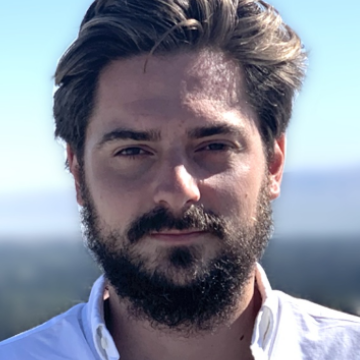


Daniel is a serial entrepreneur with a background in robotics and electrical engineering. He began his career as a Sales Engineer for a world leader in the manufacturing industry, working on projects for customers such as BMW and McDonalds. A change of pace took Daniel to Apple where he designed customer journeys for Apple stores across Europe – it was at Apple where Daniel met future business partners. He previously co-founded Kairos, an early facial recognition technology in the US (2011) and then SeeCycle, a UK based sensor technology backed by ESA to detect and save the lives of cyclists around large vehicles within our cities.
LGN was founded by Daniel (CEO) and Vladimir Ceperic (CTO) in 2018 and has already played fundamental parts in helping companies to deploy and scale their machine learning solutions. LGN is founded on the belief that our world will be increasingly dependent on AI powered autonomous systems that create huge volumes of data but that also have to react safely and immediately to the ever changing environment in which they are deployed.
3:10 pm to 3:30 pm CET
Live Q&A
3:30 pm to 3:50 pm CET
Track 1
Identifying, locating and interrogating threat communication signals
- Radio Frequencies (RF) are used for a wide spread of communication applications, detecting illicit use is critical for security
- Millimetre-wave (mmWave) frequencies are coming into high use because of RF congestion and the need for greater data throughput – these frequencies need a new range of suitable sensors to provide frequency coverage and identify
- These frequencies are used for point-to-point microwave links, fixed wireless access, 5G mobile coverage infill, Ka-band satellite links and various radar applications (automotive, perimeter protection, and military radar)
- SPECTRE is a new instrument in development at the RAL Space, it is a first of its kind mmWave wideband spectrum monitoring system is suitable for outdoor ground-fixed or vehicle-mounted installation. The system offers identification and localisation of illicit sources.
- Such a system can provide crucial security for airports, military communications, and critical infrastructure
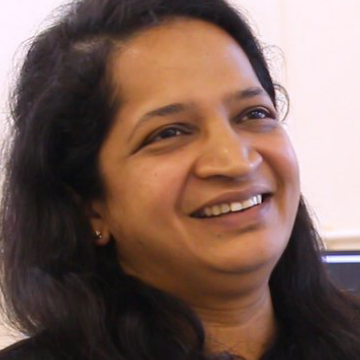


Manju Henry is a senior system engineer, she gained her PhD in microwave engineering and has been developing a range of microwave systems. In her current position at RAL Space, Manju has worked on a range of instruments for earth observation and security and defense applications.
Track 2
Evolution of the image sensors in defence applications
- Infrared detectors have more and more smaller pixels: technology evolutions
- The number of sensors in the defence platforms is also increasing
- The image sensors must now include more intelligence and send only the information useful for the mission



Eric Belhaire received his PhD Diploma in electrical engineering from the university of Paris-Sud in 1992 after graduating in applied physics from the “Ecole Normale Supérieure de Cachan” with a diploma of master and an “agrégation de Physique”. He was a research scientist at CNRS (French Research Agency) between 1992 and 2007. During this period, he was leading a research group in the Institute of Fundamental Electronics (IEF) at the University Paris Sud. He was working in the field of analog and mixed-signal integrated circuit design with a special interest for vision circuits (image sensors; silicon retinas), Microsystems and new technologies in Systems-on-chip.
Between 1998 and 1999 at Thales Company, Eric’s goal was to transfer the laboratory innovations in advanced infrared detectors. After 2000 he was scientific advisor for Thales for the development of QWIP and InGaAs detectors and their associated readout integrated circuits (ROIC) in CMOS technology. In 2008, he left the CNRS to join Thales. After several years of R&D group management, he became senior expert in Electro-Optical technologies within the technical directorate.
3:50 pm to 4:10 pm CET
Live Panel and Fireside Chat
4:10 pm to 4:40 pm CET
Round Table Discussion Content and Networking
4:40 pm to 5:10 pm CET
Panel Discussion: Future Technologies and Innovation - key challenges, opportunities and national perspectives - what is everyone doing?

Edward Hunter Christie is an independent consultant and a former NATO official. He has held a succession of roles in research, industry, EU affairs, and NATO. His most recent work focused on the development of NATO framework policies in the areas of Artificial Intelligence and Autonomous Technologies.
Kevin Shortt has worked in the space industry since 1996 and has contributed to some of Canada’s largest space missions. He obtained his B.Sc. in Physics from York University in Toronto in 2002 and his M.Sc. in Electrical Engineering from the Royal Military College of Canada. In 2012, he joined the Optical Communications Group at the German Aerospace Center just outside of Munich.
In April 2015, he moved to industry to continue his work in optical communications in Business Development and Systems Engineering at Mynaric Lasercom GmbH (formerly ViaLight Communications GmbH). Kevin is currently a Research Project Leader in Airbus’s Central Research and Technology Division and leads advancements in free-space optical communications research.

Pooja Suresh is the Director of Research & Innovation at Gastops in Ottawa, Canada. In her current role, she manages the Research department and leads her team on technology advancement programs that serve the long term vision and strategic interests of the business in the aerospace, defence and energy markets. She has built Canadian and international partnerships with industry and academia to understand the future market needs and bring to market innovative technology solutions. Pooja first started working at Gastops ten years ago. Her diverse career includes experience in environmental policy for aviation and management consulting.
Pooja chairs the Scientific Committee of the Consortium for Aerospace Research and Innovation Canada, and sits on the Carleton University Mechanical & Aerospace Industrial Advisory Board and European Turbine Network Conference Advisory Board. She has a bachelor’s degree in aerospace engineering from Carleton and a masters in aeronautics and astronautics from MIT.

Originally hailing from Vancouver, British Columbia, Rear-Admiral Jeffery Zwick joined the Canadian Forces in 1989 as a Direct Entry Officer, having previously received his Bachelor of Arts Degree in History from the University of British Columbia. As a junior officer from 1993 to 1999 he progressed through initial naval officer training and subsequent naval warfare positions through to Combat Officer in HMCS ALGONQUIN.
Promoted to Lieutenant Commander in 1999, his position as the Weapons Officer for the Canadian Pacific Fleet prepared him for assuming the duties of the Staff Above Water Warfare Officer for the Commander of the Standing Naval Force Atlantic (SNFL) in 2001. While with SNFL, he participated in OPERATION ACTIVE ENDEAVOUR, in support of NATO Article 5 operations against terrorism in the Mediterranean. This NATO experience was followed by his appointment in 2003 as the J5 Maritime Plans in the Canadian Forces Joint Operations Group (CFJOG) in Kingston, Ontario. His international experience was further rounded out after his appointment as the Executive Officer of HMCS TORONTO in 2004 during OPERATION ALTAIR.
In 2005, he was promoted to Commander and joined the naval staff in NDHQ as the Senior Staff Officer for Fleet Management, Policy and Readiness. He was then appointed Commanding Officer of HMCS MONTREAL in June 2007. Promoted in 2010, Captain(N) Zwick served as the Director of Strategic Coordination in Ottawa and following that appointment served as the Director of Defence Force Planning and Defence Program Advisor to the Vice Chief of Defence Staff. In 2015, he was promoted to Commodore and appointed Commander Canadian Fleet Pacific and Commander of the Naval Training System.
Rear-Admiral Zwick was promoted to his current rank in 2018, and assumed the role of Chief of Force Development in Ottawa. Thereafter, in 2020, he was appointed to the role of Chief of SSE Combat Systems Integration.
Rear-Admiral Zwick holds a Master’s Degree in Defense Studies and is a graduate of the National Security Programme at CFC Toronto. He was appointed an Officer of the Order of Military Merit in 2015. He and his charming wife Marta are currently residing in Ottawa, Ontario.

Edward Hunter Christie is an independent consultant and a former NATO official. He has held a succession of roles in research, industry, EU affairs, and NATO. His most recent work focused on the development of NATO framework policies in the areas of Artificial Intelligence and Autonomous Technologies.
Kevin Shortt has worked in the space industry since 1996 and has contributed to some of Canada’s largest space missions. He obtained his B.Sc. in Physics from York University in Toronto in 2002 and his M.Sc. in Electrical Engineering from the Royal Military College of Canada. In 2012, he joined the Optical Communications Group at the German Aerospace Center just outside of Munich.
In April 2015, he moved to industry to continue his work in optical communications in Business Development and Systems Engineering at Mynaric Lasercom GmbH (formerly ViaLight Communications GmbH). Kevin is currently a Research Project Leader in Airbus’s Central Research and Technology Division and leads advancements in free-space optical communications research.
Pooja Suresh is the Director of Research & Innovation at Gastops in Ottawa, Canada. In her current role, she manages the Research department and leads her team on technology advancement programs that serve the long term vision and strategic interests of the business in the aerospace, defence and energy markets. She has built Canadian and international partnerships with industry and academia to understand the future market needs and bring to market innovative technology solutions. Pooja first started working at Gastops ten years ago. Her diverse career includes experience in environmental policy for aviation and management consulting.
Pooja chairs the Scientific Committee of the Consortium for Aerospace Research and Innovation Canada, and sits on the Carleton University Mechanical & Aerospace Industrial Advisory Board and European Turbine Network Conference Advisory Board. She has a bachelor’s degree in aerospace engineering from Carleton and a masters in aeronautics and astronautics from MIT.
Originally hailing from Vancouver, British Columbia, Rear-Admiral Jeffery Zwick joined the Canadian Forces in 1989 as a Direct Entry Officer, having previously received his Bachelor of Arts Degree in History from the University of British Columbia. As a junior officer from 1993 to 1999 he progressed through initial naval officer training and subsequent naval warfare positions through to Combat Officer in HMCS ALGONQUIN.
Promoted to Lieutenant Commander in 1999, his position as the Weapons Officer for the Canadian Pacific Fleet prepared him for assuming the duties of the Staff Above Water Warfare Officer for the Commander of the Standing Naval Force Atlantic (SNFL) in 2001. While with SNFL, he participated in OPERATION ACTIVE ENDEAVOUR, in support of NATO Article 5 operations against terrorism in the Mediterranean. This NATO experience was followed by his appointment in 2003 as the J5 Maritime Plans in the Canadian Forces Joint Operations Group (CFJOG) in Kingston, Ontario. His international experience was further rounded out after his appointment as the Executive Officer of HMCS TORONTO in 2004 during OPERATION ALTAIR.
In 2005, he was promoted to Commander and joined the naval staff in NDHQ as the Senior Staff Officer for Fleet Management, Policy and Readiness. He was then appointed Commanding Officer of HMCS MONTREAL in June 2007. Promoted in 2010, Captain(N) Zwick served as the Director of Strategic Coordination in Ottawa and following that appointment served as the Director of Defence Force Planning and Defence Program Advisor to the Vice Chief of Defence Staff. In 2015, he was promoted to Commodore and appointed Commander Canadian Fleet Pacific and Commander of the Naval Training System.
Rear-Admiral Zwick was promoted to his current rank in 2018, and assumed the role of Chief of Force Development in Ottawa. Thereafter, in 2020, he was appointed to the role of Chief of SSE Combat Systems Integration.
Rear-Admiral Zwick holds a Master’s Degree in Defense Studies and is a graduate of the National Security Programme at CFC Toronto. He was appointed an Officer of the Order of Military Merit in 2015. He and his charming wife Marta are currently residing in Ottawa, Ontario.


Edward Hunter Christie is an independent consultant and a former NATO official. He has held a succession of roles in research, industry, EU affairs, and NATO. His most recent work focused on the development of NATO framework policies in the areas of Artificial Intelligence and Autonomous Technologies.
Kevin Shortt has worked in the space industry since 1996 and has contributed to some of Canada’s largest space missions. He obtained his B.Sc. in Physics from York University in Toronto in 2002 and his M.Sc. in Electrical Engineering from the Royal Military College of Canada. In 2012, he joined the Optical Communications Group at the German Aerospace Center just outside of Munich.
In April 2015, he moved to industry to continue his work in optical communications in Business Development and Systems Engineering at Mynaric Lasercom GmbH (formerly ViaLight Communications GmbH). Kevin is currently a Research Project Leader in Airbus’s Central Research and Technology Division and leads advancements in free-space optical communications research.
Pooja Suresh is the Director of Research & Innovation at Gastops in Ottawa, Canada. In her current role, she manages the Research department and leads her team on technology advancement programs that serve the long term vision and strategic interests of the business in the aerospace, defence and energy markets. She has built Canadian and international partnerships with industry and academia to understand the future market needs and bring to market innovative technology solutions. Pooja first started working at Gastops ten years ago. Her diverse career includes experience in environmental policy for aviation and management consulting.
Pooja chairs the Scientific Committee of the Consortium for Aerospace Research and Innovation Canada, and sits on the Carleton University Mechanical & Aerospace Industrial Advisory Board and European Turbine Network Conference Advisory Board. She has a bachelor’s degree in aerospace engineering from Carleton and a masters in aeronautics and astronautics from MIT.
Originally hailing from Vancouver, British Columbia, Rear-Admiral Jeffery Zwick joined the Canadian Forces in 1989 as a Direct Entry Officer, having previously received his Bachelor of Arts Degree in History from the University of British Columbia. As a junior officer from 1993 to 1999 he progressed through initial naval officer training and subsequent naval warfare positions through to Combat Officer in HMCS ALGONQUIN.
Promoted to Lieutenant Commander in 1999, his position as the Weapons Officer for the Canadian Pacific Fleet prepared him for assuming the duties of the Staff Above Water Warfare Officer for the Commander of the Standing Naval Force Atlantic (SNFL) in 2001. While with SNFL, he participated in OPERATION ACTIVE ENDEAVOUR, in support of NATO Article 5 operations against terrorism in the Mediterranean. This NATO experience was followed by his appointment in 2003 as the J5 Maritime Plans in the Canadian Forces Joint Operations Group (CFJOG) in Kingston, Ontario. His international experience was further rounded out after his appointment as the Executive Officer of HMCS TORONTO in 2004 during OPERATION ALTAIR.
In 2005, he was promoted to Commander and joined the naval staff in NDHQ as the Senior Staff Officer for Fleet Management, Policy and Readiness. He was then appointed Commanding Officer of HMCS MONTREAL in June 2007. Promoted in 2010, Captain(N) Zwick served as the Director of Strategic Coordination in Ottawa and following that appointment served as the Director of Defence Force Planning and Defence Program Advisor to the Vice Chief of Defence Staff. In 2015, he was promoted to Commodore and appointed Commander Canadian Fleet Pacific and Commander of the Naval Training System.
Rear-Admiral Zwick was promoted to his current rank in 2018, and assumed the role of Chief of Force Development in Ottawa. Thereafter, in 2020, he was appointed to the role of Chief of SSE Combat Systems Integration.
Rear-Admiral Zwick holds a Master’s Degree in Defense Studies and is a graduate of the National Security Programme at CFC Toronto. He was appointed an Officer of the Order of Military Merit in 2015. He and his charming wife Marta are currently residing in Ottawa, Ontario.

Edward Hunter Christie is an independent consultant and a former NATO official. He has held a succession of roles in research, industry, EU affairs, and NATO. His most recent work focused on the development of NATO framework policies in the areas of Artificial Intelligence and Autonomous Technologies.
Kevin Shortt has worked in the space industry since 1996 and has contributed to some of Canada’s largest space missions. He obtained his B.Sc. in Physics from York University in Toronto in 2002 and his M.Sc. in Electrical Engineering from the Royal Military College of Canada. In 2012, he joined the Optical Communications Group at the German Aerospace Center just outside of Munich.
In April 2015, he moved to industry to continue his work in optical communications in Business Development and Systems Engineering at Mynaric Lasercom GmbH (formerly ViaLight Communications GmbH). Kevin is currently a Research Project Leader in Airbus’s Central Research and Technology Division and leads advancements in free-space optical communications research.
Pooja Suresh is the Director of Research & Innovation at Gastops in Ottawa, Canada. In her current role, she manages the Research department and leads her team on technology advancement programs that serve the long term vision and strategic interests of the business in the aerospace, defence and energy markets. She has built Canadian and international partnerships with industry and academia to understand the future market needs and bring to market innovative technology solutions. Pooja first started working at Gastops ten years ago. Her diverse career includes experience in environmental policy for aviation and management consulting.
Pooja chairs the Scientific Committee of the Consortium for Aerospace Research and Innovation Canada, and sits on the Carleton University Mechanical & Aerospace Industrial Advisory Board and European Turbine Network Conference Advisory Board. She has a bachelor’s degree in aerospace engineering from Carleton and a masters in aeronautics and astronautics from MIT.
Originally hailing from Vancouver, British Columbia, Rear-Admiral Jeffery Zwick joined the Canadian Forces in 1989 as a Direct Entry Officer, having previously received his Bachelor of Arts Degree in History from the University of British Columbia. As a junior officer from 1993 to 1999 he progressed through initial naval officer training and subsequent naval warfare positions through to Combat Officer in HMCS ALGONQUIN.
Promoted to Lieutenant Commander in 1999, his position as the Weapons Officer for the Canadian Pacific Fleet prepared him for assuming the duties of the Staff Above Water Warfare Officer for the Commander of the Standing Naval Force Atlantic (SNFL) in 2001. While with SNFL, he participated in OPERATION ACTIVE ENDEAVOUR, in support of NATO Article 5 operations against terrorism in the Mediterranean. This NATO experience was followed by his appointment in 2003 as the J5 Maritime Plans in the Canadian Forces Joint Operations Group (CFJOG) in Kingston, Ontario. His international experience was further rounded out after his appointment as the Executive Officer of HMCS TORONTO in 2004 during OPERATION ALTAIR.
In 2005, he was promoted to Commander and joined the naval staff in NDHQ as the Senior Staff Officer for Fleet Management, Policy and Readiness. He was then appointed Commanding Officer of HMCS MONTREAL in June 2007. Promoted in 2010, Captain(N) Zwick served as the Director of Strategic Coordination in Ottawa and following that appointment served as the Director of Defence Force Planning and Defence Program Advisor to the Vice Chief of Defence Staff. In 2015, he was promoted to Commodore and appointed Commander Canadian Fleet Pacific and Commander of the Naval Training System.
Rear-Admiral Zwick was promoted to his current rank in 2018, and assumed the role of Chief of Force Development in Ottawa. Thereafter, in 2020, he was appointed to the role of Chief of SSE Combat Systems Integration.
Rear-Admiral Zwick holds a Master’s Degree in Defense Studies and is a graduate of the National Security Programme at CFC Toronto. He was appointed an Officer of the Order of Military Merit in 2015. He and his charming wife Marta are currently residing in Ottawa, Ontario.
5:10 pm to 5:30 pm CET
Case Study – Global weather measurements using nano satellites with hyperspectral microwave capability
- Weather variability accounts for 3 to 6 % or over £500 Bn of GDP in the US alone
- Better forecasting for adaptation, early warnings, efficient operations and resource management can have a dramatic effect on weather
- Satellites observation provide truly global coverage and the advancement of miniature satellites improve the spatial and temporal resolution of these observations
- We present HYMS –a first of its kind miniature hyperspectral microwave sounder which is small enough to go onboard a nanosatellite constellation that can provide a step change in measuring and monitoring our planets’ atmosphere and providing critical data on extreme events, rainfall and temperature for a smarter plant
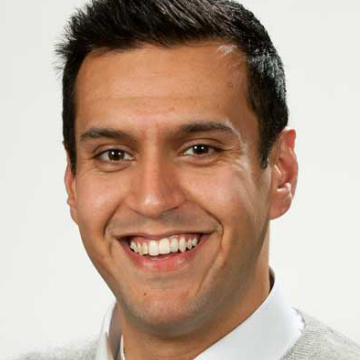


Mohammed has a background in environmental engineering, graduating with a Masters from Imperial College London. He has been working on starting and growing early stage technology companies ever since graduating, in the field of sensors. More recently he has started working with RAL Space millimeter wave technology group, working on the development and start-up launch of a high miniature hyperspectral microwave sensor for advanced weather forecasting.
5:30 pm to 5:50 pm CET
Closing Keynote – Dissimilar Redundancy: Increasing Reliability in Autonomous Systems through mixed sensor types
Discussion of increasing reliability and safety in autonomous systems by using the principle of “Dissimilar Redundancy” – selecting sensors that perform the same task using different physics.
Autonomous vehicles face operating conditions in the real world that are difficult to reproduce in a lab or in simulation. Autonomous systems use sensors to probe the environment and find a safe path through obstacles and hazards. Often the cause of failure in these sensors are not internal but caused by the environment. Rain, sun, snow, dust, or other factors may limit or attenuate the sensor’s range, accuracy, or discrimination. The use of dissimilar sensors in a redundant set of autonomy sensors in safety critical applications can be key to providing the level of capability required.



Francis Govers is the designer of over 30 unmanned land, sea, air and space vehicles. He currently works at Bell Flight as Autonomy Lead for the Innovation Group. He is an Air Force veteran, was head of command and control for the International Space Station, Deputy Chief Engineer for Unmanned Systems at the US Army Future Combat Systems, participated in the DARPA Grand Challenge, and managed a Zeppelin airship.
At Sportvision, he supported the “Yellow Line” for NFL football, and designed the onboard telemetry system for NASCAR and IndyCar. He has published 45 articles or papers and authored the book “Artificial Intelligence for Robotics”. He received five outstanding achievement awards from NASA, the Pioneer Award from the National Space Society, and recognition from Scientific American for “World Changing Ideas”. Francis earned his master’s degree from Brandeis University.
5:50 pm to 6:10 pm CET
Live Panel and Fireside Chat
6:10 pm to 6:20 pm CET
Chair’s Closing Remarks and Reflections
Chair: Heather J. Richman – Defense Investor Network – USA